Guides
What Not to Use on a Headstone (Common Mistakes That Cause Damage)
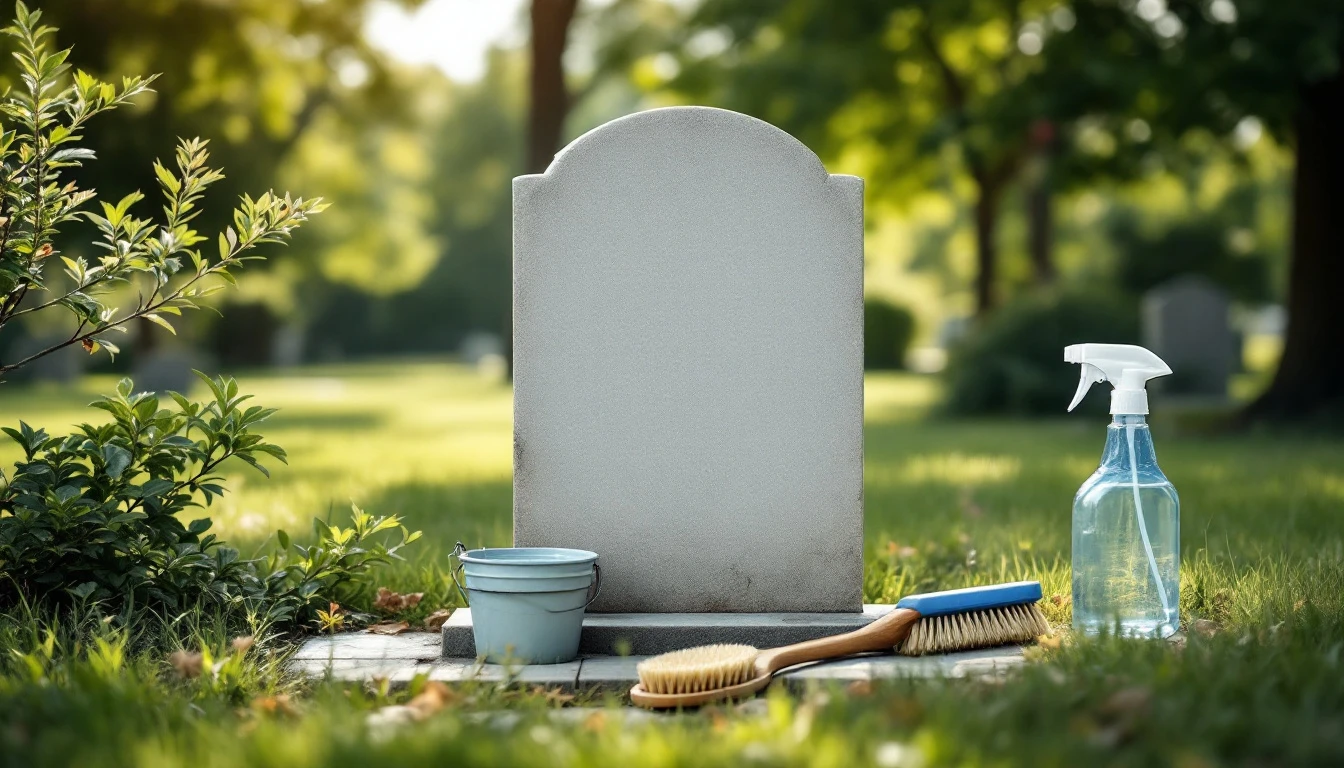
Headstone cleaning from £75 — before & after photos with every visit.
No need to attend. Free written quote, usually within 24 hours.
In short: Never use bleach, household cleaners, acids (including vinegar, brick acid and descalers), wire brushes, or a pressure washer on a headstone. They cause yellowing, pitting, salt damage and surface loss — and the harm often only appears weeks later, by which point it cannot be undone. The safe method is plain water, a soft brush and patience.
Almost all the permanent headstone damage we are called out to in London began with a family member trying to help. The intention is always loving; the product or tool is simply wrong for stone. The frustrating part is that the damage frequently looks fine on the day and only reveals itself weeks or months later, once the harm is locked in. This guide explains exactly what to keep away from a memorial, why each one causes lasting damage, and what to reach for instead.
Bleach and household cleaners
Bleach is the single most common mistake we see, precisely because it appears to work. Splash it on, scrub, and the stone looks brighter the same afternoon. Underneath, though, bleach reacts with the minerals in natural stone, breaks down the binders that hold sandstone and limestone together, and drives soluble salts deep into the material. Over the following weeks those salts migrate back to the surface and crystallise, causing a chalky white bloom, yellowing, flaking and eventually crumbling at the edges of lettering.
Household sprays, washing-up liquid, cream cleaners and “multi-surface” products are no better. They contain detergents, surfactants and fragrances that leave a sticky residue. That residue actually attracts dirt and encourages fresh algae growth, so the stone gets dirtier faster than before. On polished granite these films also dull the shine permanently.
Acids (vinegar, brick acid, descalers)
Anything acidic is catastrophic for marble, limestone and sandstone, because these stones are calcium-based and acid literally dissolves them. The damage is etching: a permanent loss of surface, a frosted or pitted finish, and softened, illegible lettering. There is no buffing it out — the stone is gone.
People are often surprised that household vinegar counts, because it is sold as a “natural” cleaner. Natural does not mean gentle. Vinegar, lemon juice, limescale removers, patio and brick acid, and toilet descalers are all far too aggressive for memorial stone. If a product is designed to dissolve limescale, it will happily dissolve a limestone or marble headstone too.
Wire brushes and metal tools
A wire brush feels efficient against stubborn black growth, but the bristles scratch and gouge the surface, opening up the stone so it holds water and dirt more readily and weathers faster. Worse, tiny fragments of metal break off and embed in the stone. Over the following months those particles rust, bleeding ugly orange streaks across the memorial that are extremely difficult to remove.
The same applies to metal scrapers, scouring pads, wire wool and stiff abrasive blocks. Use only soft natural-bristle or nylon brushes, and a wooden or plastic spatula if you genuinely need to lift loose debris from carving.
Pressure washers
If there is one tool to ban from the cemetery, it is the pressure washer — it is the worst of all. The jet that strips a patio is wildly too powerful for weathered stone. It blasts away the softened outer surface, tears off lettering and any remaining paint or gilding, and rounds off the crisp edges of the carving. On older or already-fragile memorials it can dislodge sections entirely.
It also does invisible harm. High-pressure water is forced deep into the body of the stone and into the joints of the memorial, where it sits and accelerates internal decay, frost damage and the salt problems described below. We never pressure wash a memorial under any circumstances, and we would urge any family or contractor to do the same.
”Magic” sealants, coatings and WD-40 type products
Be wary of any product that promises to seal, waterproof, “feed” or permanently protect a headstone, along with oils and water-displacing sprays such as WD-40 used to “bring up the colour”. Natural stone needs to breathe — it absorbs and releases moisture constantly. A surface sealant or oily coating traps moisture and salts inside the stone, and the only way out is for the surface to blow off, taking the coating and a layer of stone with it. These products also attract dust and grime and can leave a patchy, unnatural sheen that is very hard to reverse.
Why the damage often appears weeks later
This is the cruel part, and the reason so many well-meant cleans go wrong. Stone is porous and holds water like a sponge. When you apply bleach, acid or a harsh cleaner, it dissolves salts and minerals and carries them into the stone. As the memorial slowly dries over the following days and weeks, that salty water is drawn back towards the surface, where the water evaporates and leaves the salt crystals behind.
Those growing crystals exert real pressure inside the stone’s pores — enough to push the surface apart from within. The result is spalling: flaking, blistering and powdering of the surface, which is why a headstone can look perfectly clean on the day and then start shedding its face a month later. By the time the symptoms show, the cause is long gone and the damage is permanent.
What to use instead
The good news is that safe headstone cleaning needs almost nothing. Plain, clean water and a soft brush will remove the great majority of dirt and loose growth. Work gently from the bottom upwards to avoid streaking, rinse well, and accept that it is a slow, patient job rather than an instant transformation.
For stubborn algae, lichen and the black biological staining common in damp London cemeteries, the correct answer is a proper stone-safe biocide, applied at the right dilution and simply left to work over weeks — not scrubbed. It is gentle, it keeps working long after you leave, and crucially it does not damage the stone. We walk through the full safe routine in how to clean a headstone safely, and explain how to identify your material and treat it correctly in our stone-type cleaning guide. If you would rather not risk it, our headstone cleaning service uses only these gentle, conservation-led methods.
Frequently asked questions
Is vinegar safe to use on a headstone? No. Vinegar is acidic and will etch and dissolve the surface of marble, limestone and sandstone, leaving a permanent frosted, pitted finish and softened lettering. “Natural” does not mean safe for stone — keep all acids well away from a memorial.
Can I jet-wash a granite grave? Please don’t. Even hard-wearing granite can lose its polish, lettering and any paint or gilding under a pressure washer, and the forced water drives moisture and salts into the stone and its joints. Granite is tough, but the jet is tougher, and the harm is often invisible until later.
I’ve already used bleach — what now? Don’t panic, and don’t apply anything else to try to “fix” it. Rinse the memorial thoroughly with plenty of clean water to flush out as much residue and salt as possible, then leave it alone. If staining, yellowing or flaking appears over the following weeks, get in touch — we can assess the stone and advise whether it can be carefully restored.
We’re here to help
If a memorial in your care has already been stained, etched or worn by the wrong product, please don’t feel you’ve made an unfixable mistake on your own — these things happen with the best of intentions, and a great deal can often be put right. Our headstone repair and restoration service covers re-lettering, surface repair and the careful reversal of cleaning damage wherever it is possible. Memorial Guardian London works across all 32 boroughs and the wider M25 area using only gentle, stone-safe methods. Contact us for a free, no-obligation assessment and we’ll let you know honestly what can be done.
Headstone cleaning from £75 — before & after photos with every visit.
No need to attend. Free written quote, usually within 24 hours.
About the author
The Memorial Guardian Team